Discover When and How to Prune Roses for Healthier Plants and More Flowers.
Learn when to prune roses and how to make the right cuts—whether you’re growing climbers, heirloom varieties, or newer hybrids.
Once you learn the proper pruning techniques and timing, you can expect to see improvement almost immediately. Watch for healthier growth and increased blooming throughout the season. Do not be intimidated by your roses’ thorny canes or shrubby habits. Once you read the easy, step-by-step instructions below for pruning any rose type, just slip on a good, heavy pair of gauntlet gloves, grab your pruning shears, and get going.
When to Prune Roses
Credit: Blaine Moats
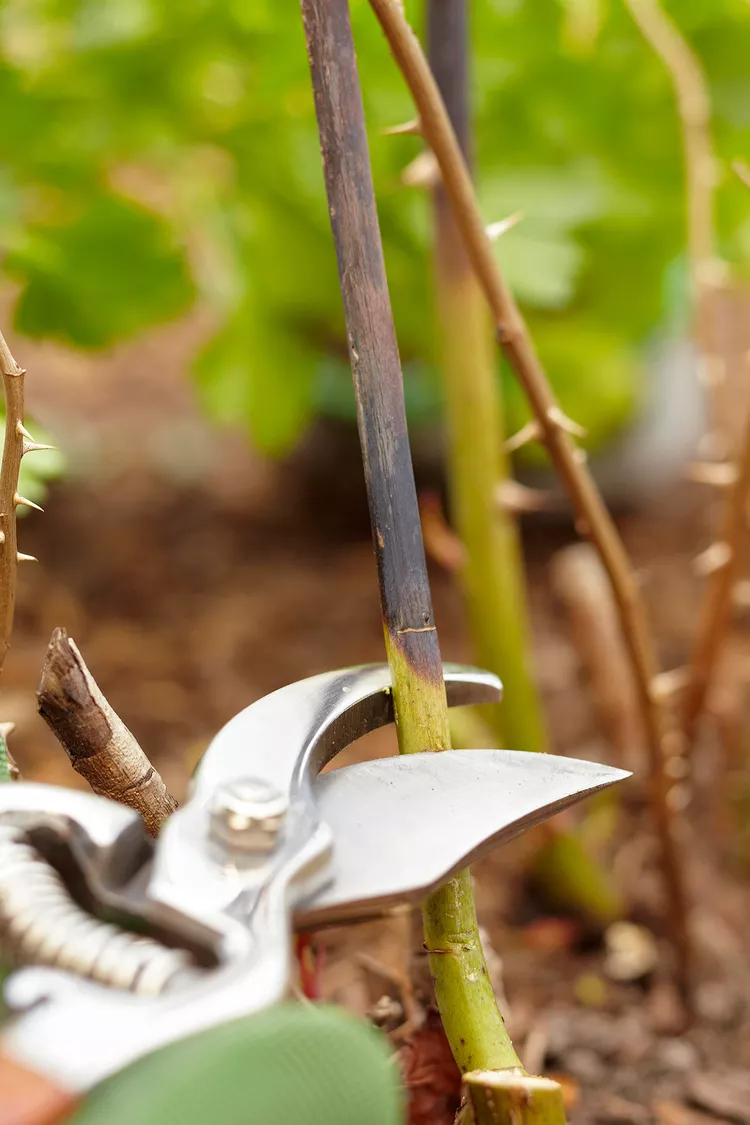
Plan to prune your roses at least once a year. For once-a-year bloomers, wait until early summer—right after flowering has ended. You can do a little shaping in late summer, but pruning healthy canes (also known as stems) after that will reduce the amount of flowers next year.
For all other rose types, the ideal time to prune is late winter or early spring, just before your area’s last predicted frost. Since frost dates can differ significantly from one year to another, keep an eye on your local weather forecast. While it is not something to fret about, pruning when it is optimal reduces the risk of frost damage and saves you from cutting out cold-damaged growth repeatedly.
Use your USDA Hardiness Zone as a reference for when to start pruning roses in your region. In general, here is a schedule by zone:
• January: Zones 9 and 10
• February: Zones 8 and 9
• March: Zones 7 and 8
• April: Zones 5, 6, and 7
• May: Zones 3, 4, and 5
How Much to Cut Back Roses

Credit: Laurie Black
There are several pruning strategies, depending on your goals and the rose variety you’re working with. Newly planted roses should be pruned only lightly during their first growing season. This allows the plant to focus its energy on developing strong roots instead of growing tall stems or foliage.
For established roses, try one of these three pruning methods:
1. Light pruning removes less than one-third of the plant. If your rose is shaping up well, flowering well, and not appearing to be suffering from much disease, you can adopt a minimalist attitude and make only selective cuts.
2. Moderate pruning cuts the rose back to around 18 to 24 inches, with five to twelve canes growing from the base. It encourages a more branching pattern and promotes new growth and better flowering.
3. Hard pruning reduces the plant to 6 to 10 inches in height and leaves only three to five canes. It’s beneficial for promoting long-stemmed blooms (like hybrid teas) or bringing back older, poorly performing roses. Remember that some rose varieties may not have a lot of flowers right after such a drastic pruning, since they’ll devote their energy to growing new stems that won’t flower until the following year—even if they normally flower more than once a year.
Climbing roses are pruned under a different principle. If they’ve become too large or bewildering, you can cut them back severely by eliminating excess canes at the base. But always leave three to five primary canes, and never prune them shorter than 5 feet.
How to Prune Roses: Step-by-Step Guide
Credit: Blaine Moats
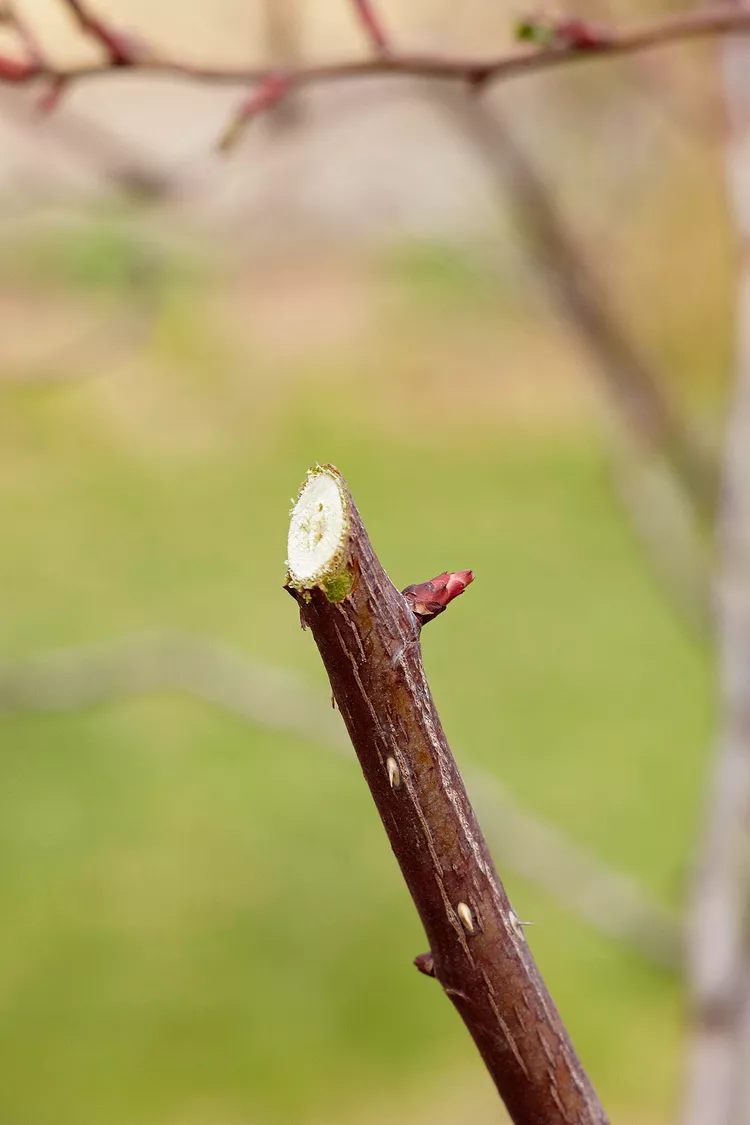
After deciding how much to prune, follow this step-by-step guide to figure out what to cut and in what order. Make final cuts at a 45-degree angle just above an outward-facing bud eye. Roses are robust, so don’t worry too much about errors—new growth will typically obscure mistakes before long.
There’s no necessity to seal rose cuts, generally, as the plant heals by itself. Some gardeners do apply white glue to the cuts to repel disease and pests, including cane borers.
1. Eliminate dead material.
Start by pruning off any dead branches or canes. Healthy wood is normally green just beneath the bark.
2. Cut back damaged or diseased stems.
Prune back any regions that are diseased or damaged until you reach healthy tissue.
3. Remove crossing branches.
Cut out branches that cross through the middle of the plant. Prune them at the point where they emerge from a main cane to improve air circulation and let more light reach interior growth.
4. Thin out weak growth.
Cut out weak or thin stems that are not the same vigor as the others. This puts energy into more productive canes.
5. Remove suckers.
For grafted roses, cut off any growth coming from the rootstock below the graft union. These suckers are typically different from the desired variety and are often less vigorous.
6. Eliminate old woody growth.
Prune out some of the older stems if it will not thin out the plant too much. This stimulates new, vigorous growth with better blooms.
7. Avoid rubbing branches.
If any of the remaining stems rub against one another, cut out the smaller one to avoid wounds that can introduce disease.
8. Shape the plant.
Prune to your desired size and shape with final cuts. Shaping in a rounded, dome-like form encourages top-to-bottom flowers—unlike a flat-top shape, which may discourage flowering toward the base.
9. Clean up debris.
Once you’ve finished pruning, it’s time for the last step: cleanup. The easiest (and safest) method is to rake clippings into a large container or a cardboard box. Then step back, admire your work, and look forward to a season of thriving roses.